
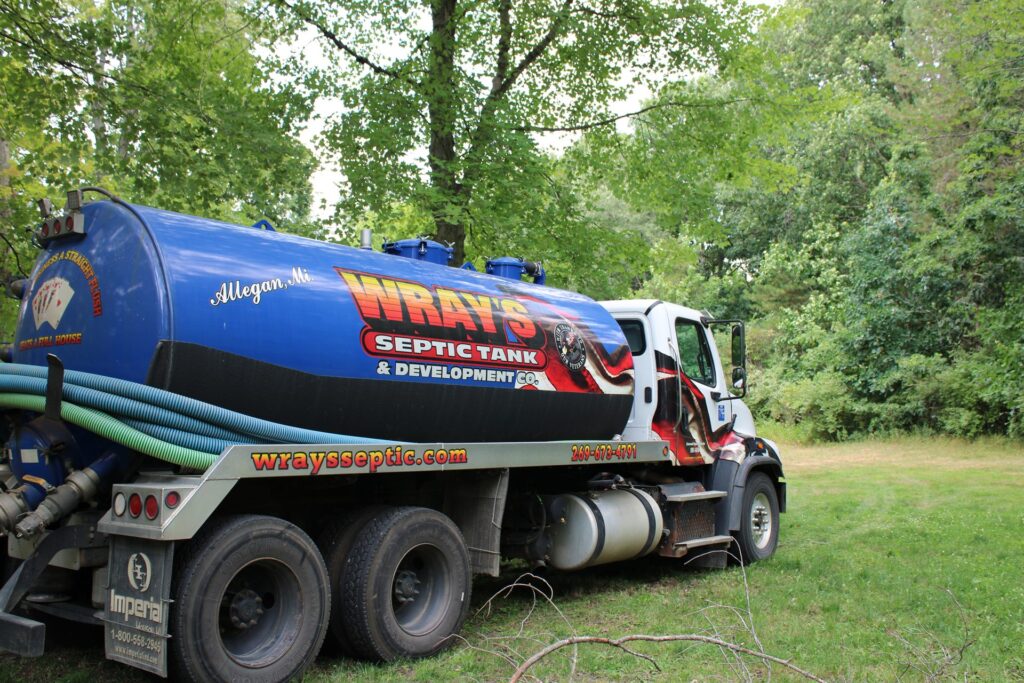
Most homeowners assume septic failure comes out of nowhere. A working system one week, a backup the next. In our experience at Wray’s, that’s rarely how it plays out. Septic system failure almost always builds slowly. Property owners who catch it early usually have a lot more options than the ones who wait for a crisis.
We’ve been pumping, installing, and repairing systems across Allegan, Barry, Kalamazoo, and Van Buren Counties since 1968. This post breaks down what failure looks like and what causes it. Then it walks through what to do while a system can still be saved.
Failing vs. Failed: What’s the Difference
These two words get used interchangeably, but they mean different things on a job site. A system is “failing” when something’s gone wrong but the tank itself is still intact. That covers most of what we see, and most of it can be fixed. A system is only truly “failed” once the tank has physically collapsed. Short of that, most situations call for a repair. Full replacement only becomes necessary once the tank itself is gone.
That distinction matters, because it changes the conversation. A failing system gives you options. A failed one doesn’t.
Signs of Septic System Failure
Septic system warning signs show up in two places: the tank and the drainfield.
- On the tank: Our techs can often tell just by looking. A ring or access lid that’s turned black and moldy is a sign the tank has been struggling for a while. It might hold on for another year or two, but it’s not going to pass inspection if the property ever goes up for sale.
- On the drain field: Saturation is the clearest of the septic drainfield failure signs. A healthy drainfield absorbs water into the soil. A failing one leaves the ground wet and spongy on top, because the soil underneath can’t keep up anymore.
There’s also a failure mode you won’t see. When a drain bed starts to fail, gas from the breakdown process backs up through the pipes and into the tank itself. You won’t notice it happening, but it accelerates the damage to the whole system. This is one reason septic system failure can seem sudden to a homeowner even though it’s been building for a while.
Common Causes of Septic Tank Failure
A few septic tank failure causes come up again and again.
- Overuse. Every system is sized for a certain amount of water use, and pushing well past that day after day shortens its life.
- Water softeners connected to the system. We advise against connecting a water softener directly to a septic system. It’s a piece of advice we give often, and one homeowners don’t always think to ask about before they’ve already done it.
- Age, though less often than people assume. A well-installed system in good soil doesn’t typically wear out ahead of schedule on its own. Something else gets there first, usually a bad connection or a manufacturing issue.
Septic System Lifespan: What to Expect
Septic system lifespan is a question we hear often, and the honest answer is a wide range. A properly installed system in good soil should last 35 to 50 years. That’s assuming normal use and no shortcuts during installation.
Age by itself rarely explains an early failure. When we dig up a system that didn’t make it to the end of that range, another factor is often involved. That’s usually a water softener connection or years of overuse.
Homeowner Habits That Speed Up Failure
Beyond water softeners, a few everyday habits shorten a system’s life more than people realize.
Flushing baby wipes is the biggest one we don’t hear homeowners talk about. Most people already know not to flush tampons. Wipes get treated as an exception, even the ones labeled “flushable,” and they cause the same kind of buildup and clogging over time.
Harsh chemicals and cleaners are worth being careful with too. Septic systems rely on bacteria to break down waste, and anything that disrupts that balance strains the whole system.
When a System Can Be Repaired Instead of Replaced
The earlier you catch a problem, the more options you have.
If we catch a drain field becoming saturated before the gas backup reaches the tank, a full replacement isn’t necessary. We can install a second drain bed alongside the original and connect the two with an alternator valve. It’s the same approach we use for standard drain field replacements. That lets you switch between beds, resting one for a few years while the other carries the load. That approach extends the system’s life without a full replacement.
If cost is part of what’s holding you back from addressing a problem early, programs like Community Action and Michigan Saves offer financing help for septic system work. Worth a call before assuming replacement is out of reach.
What to Do If You Suspect a Problem
A slow drain field or a moldy access lid calls for a phone call right away. The same goes for a system reaching the older end of its expected lifespan. Most of what we find is fixable when we catch it in time. That often happens during routine pumping, which is one more reason staying on schedule matters.
If you’re noticing any of these signs, call us at (269) 673-4791 or complete our contact form. We’ll take a look and tell you where things stand.